Top 10 Fire Safety Audit Findings That Put Industries at Risk

Process Hazards Analysis Techniques: Methods, Examples, Checklist & Best Practices
August 1, 2026
HIRA vs. HAZOP: Understanding the Right Risk Assessment for Your Industry
August 5, 2026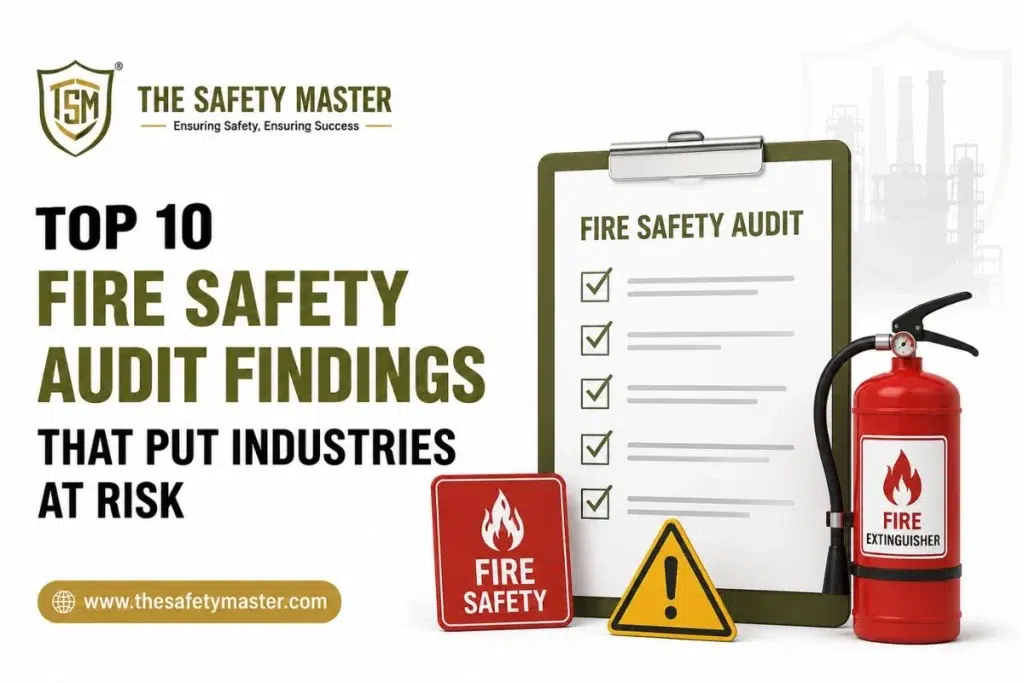
Fire accidents can lead to severe injuries, property damage, environmental losses, production downtime, and legal penalties. A Fire Safety Audit is one of the most effective ways to identify fire hazards before they become major incidents. At The Safety Master, we conduct detailed fire safety audits to help industries improve compliance, reduce risks, and protect employees and assets.
Many organizations install fire protection systems but fail to maintain them properly. During audits, several common issues repeatedly appear across factories, warehouses, commercial buildings, hospitals, and manufacturing units. In this article, we discuss the top 10 fire safety audit findings that put industries at risk and explain how they can be corrected.
Why Is a Fire Safety Audit Important?
A fire safety audit is a systematic inspection of a facility to evaluate fire prevention measures, emergency preparedness, fire protection systems, and compliance with applicable fire safety regulations.
The audit helps organizations:
- Identify fire hazards
- Improve emergency response
- Reduce business interruption
- Ensure legal compliance
- Protect lives and assets
- Improve insurance readiness
Top 10 Fire Safety Audit Findings That Increase Industrial Risk
1. Blocked or Obstructed Emergency Exits
One of the most common findings during a fire safety audit is blocked emergency exits.
Common Problems
- Storage materials kept near exit doors
- Locked emergency exits
- Narrow evacuation routes
- Missing exit signage
Risk
During an emergency, blocked exits delay evacuation and increase casualties.
Recommendation
- Keep exits clear at all times.
- Install illuminated exit signs.
- Conduct regular evacuation inspections.
2. Expired or Improperly Maintained Fire Extinguishers
Many facilities install extinguishers but forget periodic inspection.
Common Findings
- Expired refill dates
- Low pressure
- Missing inspection tags
- Wrong extinguisher type
Risk
Extinguishers may fail during an actual fire.
Recommendation
- Inspect monthly.
- Service annually.
- Use extinguishers suitable for fire classes.
3. Faulty Fire Detection and Alarm Systems
Fire alarm systems are often neglected after installation.
Common Issues
- Non-functional smoke detectors
- Damaged wiring
- Manual call points not working
- Alarm sound too low
Risk
Late detection increases fire spread.
Recommendation
- Perform routine testing.
- Replace defective detectors immediately.
4. Poor Electrical Safety Practices
Electrical faults remain one of the leading causes of industrial fires.
Common Audit Findings
- Overloaded circuits
- Damaged cables
- Loose electrical connections
- Temporary wiring
Risk
Electrical sparks can ignite combustible materials.
Recommendation
- Conduct thermal scanning.
- Schedule preventive maintenance.
- Replace damaged wiring.
5. Improper Storage of Flammable Materials
Many industries store chemicals without proper segregation.
Common Problems
- Mixing incompatible chemicals
- No ventilation
- Excess stock
- Missing warning labels
Risk
Fire spreads rapidly and may trigger explosions.
Recommendation
- Follow chemical storage guidelines.
- Use approved storage cabinets.
- Maintain safety distances.
6. Inadequate Fire Fighting Equipment
Sometimes equipment is available but insufficient for facility size.
Findings
- Missing hydrants
- Low water pressure
- Damaged hose reels
- Insufficient extinguishers
Risk
Fire cannot be controlled during initial stages.
Recommendation
Conduct hydraulic testing and verify equipment placement.
7. Lack of Employee Fire Safety Training
Technology alone cannot prevent fire accidents.
Audit Observations
- Employees unaware of evacuation routes
- No extinguisher training
- No emergency drills
- Poor emergency communication
Risk
Human error increases during emergencies.
Recommendation
Conduct regular fire safety awareness programs and mock drills.
8. Missing Fire Safety Documentation
Documentation plays an important role during audits.
Missing Documents
- Inspection records
- Maintenance logs
- Fire drill reports
- Equipment testing reports
Risk
Failure during regulatory inspections.
Recommendation
Maintain updated records for all fire safety activities.
9. Poor Housekeeping
Accumulated combustible waste significantly increases fire risk.
Examples
- Paper waste
- Oil spills
- Dust accumulation
- Packaging material
Risk
Small ignition sources become major fires.
Recommendation
Implement regular housekeeping inspections.
10. Non-Compliance with Fire Safety Standards
Many organizations fail to comply with applicable fire regulations.
Common Non-Compliance Areas
- Building layout
- Fire exits
- Fire doors
- Emergency lighting
- Fire suppression systems
Risk
Legal penalties, insurance issues, and increased accident risk.
Recommendation
Perform periodic fire safety audits and implement corrective actions promptly.
Fire Safety Audit Checklist
A standard Fire safety audit checklist generally includes:
Building Safety
- Emergency exits
- Escape routes
- Fire doors
- Emergency lighting
Fire Protection Systems
- Fire extinguishers
- Fire hydrants
- Sprinkler systems
- Smoke detectors
- Fire alarms
Electrical Safety
- Distribution panels
- Wiring condition
- Earthing
- Cable management
Chemical Safety
- Storage practices
- Labeling
- Ventilation
- Spill control
Emergency Preparedness
- Fire drills
- Emergency response team
- Evacuation maps
- Training records
A comprehensive Fire safety audit checklist for industry should also include process-specific fire hazards, combustible dust risks, hazardous material storage, and production equipment inspections.
What Should a Fire Safety Audit Report Include?
A professional audit report should contain:
- Executive summary
- Scope of audit
- Applicable standards
- Observations
- Risk assessment
- Photographic evidence
- Non-conformities
- Corrective actions
- Priority classification
- Conclusion
Organizations searching for a Fire Safety AUDIT report pdf free download should remember that every facility has unique fire risks. A sample report can be useful for understanding the format, but an actual audit report must be prepared based on the site’s specific conditions and applicable regulations.
Fire Safety Audit Report for Hospital
Hospitals require specialized audits because of vulnerable occupants and critical medical operations.
A Fire safety audit report for hospital should assess:
- ICU fire protection
- Oxygen storage safety
- Emergency power systems
- Evacuation procedures
- Fire compartmentation
- Alarm systems
- Staff emergency training
Healthcare facilities require frequent inspections to ensure patient safety during emergencies.
Fire Safety Audit Template
A standard Fire safety audit template usually includes:
Basic Information
- Facility name
- Audit date
- Auditor details
- Department
Inspection Items
- Fire extinguishers
- Alarm systems
- Emergency exits
- Electrical safety
- Hazardous storage
- Housekeeping
- Documentation
Risk Rating
- Low
- Medium
- High
- Critical
Recommendations
- Immediate actions
- Long-term improvements
- Responsible person
- Target completion date
Fire Safety Audit Companies in India
Choosing experienced Fire safety Audit companies in India is important because qualified auditors understand industrial processes, applicable standards, and regulatory requirements.
An experienced audit partner provides:
- Comprehensive inspections
- Regulatory compliance support
- Practical recommendations
- Risk-based assessments
- Detailed audit reports
- Employee awareness programs
The Safety Master offers professional fire safety auditing services for manufacturing plants, warehouses, commercial buildings, hospitals, educational institutions, and process industries.
Fire Safety Auditor Qualifications
Professional Fire safety auditor qualifications generally include:
Educational Background
- Fire Engineering
- Safety Engineering
- Mechanical Engineering
- Industrial Safety
Professional Certifications
- NEBOSH
- IOSH
- Diploma in Fire & Safety
- Industrial Safety certifications
Experience
- Fire risk assessment
- Fire protection systems
- Emergency planning
- Industrial inspections
- Applicable fire safety standards
Qualified auditors combine technical expertise with practical industrial experience to identify hazards and recommend effective corrective measures.
How Often Should Industries Conduct a Fire Safety Audit?
The audit frequency depends on industry type and risk level.
General recommendations:
- High-risk industries: Every 6 months
- Manufacturing units: Annually
- Hospitals: Annually or as required by regulations
- Warehouses: Annually
- Commercial buildings: Annually
Additional audits should be conducted after major modifications, process changes, or fire incidents.
Benefits of Regular Fire Safety Audits
Regular fire safety audits help organizations:
- Reduce fire hazards
- Improve employee safety
- Ensure regulatory compliance
- Minimize production losses
- Protect business continuity
- Lower insurance risks
- Improve emergency preparedness
- Enhance operational reliability
Why Choose The Safety Master?
At The Safety Master, our experienced fire safety professionals conduct systematic audits tailored to your facility’s operations. We identify potential hazards, evaluate existing fire protection measures, and provide practical recommendations to improve compliance and reduce fire risks.
Whether your organization operates in manufacturing, healthcare, commercial infrastructure, or heavy industry, our fire safety audit services help create a safer and more resilient workplace.
FAQs
What is a Fire Safety Audit?
A fire safety audit is a detailed inspection that evaluates fire hazards, fire protection systems, emergency preparedness, and compliance with fire safety regulations.
Why is a Fire Safety Audit important?
It helps identify hazards, improve fire protection, protect employees, reduce financial losses, and meet regulatory requirements.
Who should conduct a Fire Safety Audit?
A qualified fire safety auditor with relevant education, certifications, and industrial experience should perform the audit.
How often should industries conduct a Fire Safety Audit?
Most industries should conduct audits annually, while high-risk facilities may require audits every six months.
What documents are required during a Fire Safety Audit?
Common documents include maintenance records, fire drill reports, inspection logs, emergency plans, equipment testing reports, and training records.
Can a Fire Safety Audit reduce insurance risks?
Yes. Regular audits demonstrate proactive risk management, improve fire protection, and may positively influence insurance assessments.
What industries require Fire Safety Audits?
Manufacturing plants, hospitals, warehouses, commercial buildings, educational institutions, pharmaceutical companies, chemical industries, and logistics facilities all benefit from regular fire safety audits.
Conclusion
A Fire Safety Audit is much more than a regulatory requirement. It is a proactive approach to protecting people, infrastructure, and business operations from preventable fire incidents. By addressing common findings such as blocked exits, faulty alarms, electrical hazards, poor housekeeping, and inadequate training, organizations can significantly reduce fire risks.
Partnering with experienced professionals like The Safety Master ensures that your facility receives a thorough assessment, practical recommendations, and ongoing support to maintain a safe and compliant workplace.