Navigating the PSSR Process: A Detailed Guide to Pre-startup Safety Review

Fire Risk Assessment Prioritisation Tool (FRAPT) and The Safety Master: Leading Fire Safety Consultants
June 13, 2023
Enhancing Fire Safety: The Importance of Conducting a Thorough Fire Risk Assessment and The Safety Master as Your Trusted Fire Safety Consultant
June 14, 2023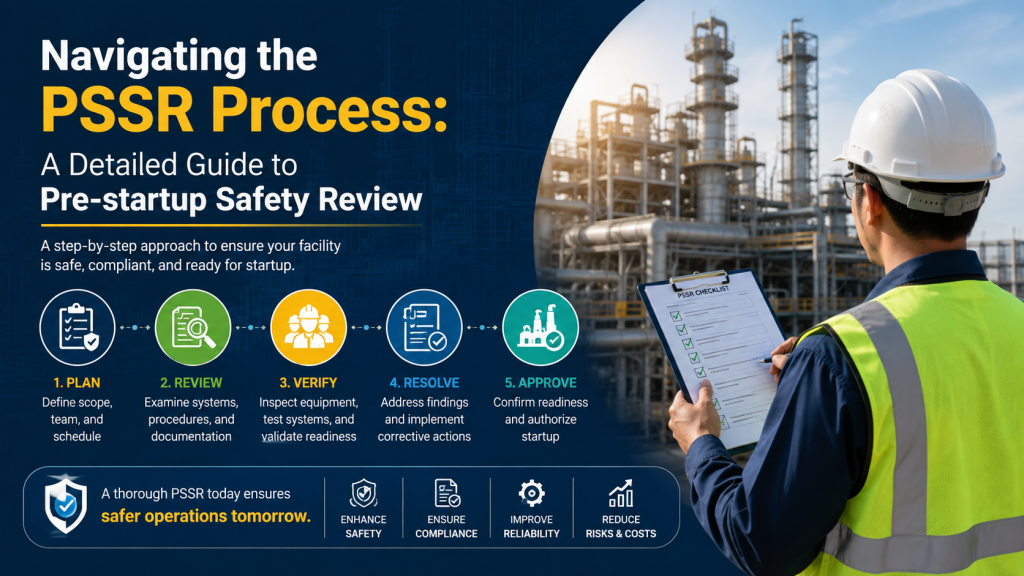
In this article, we’ll be delving into the complex world of PSSR (Pre-Startup Safety Review) and guiding you through the process of conducting a thorough study analysis. As any experienced professional knows, navigating this complicated process can be a daunting task. The Safety Master provides valuable expertise and guidance for understanding the key aspects of PSSR. However, armed with the right knowledge, it need not be so. We’ll take you step by step through this challenging process, from assessing site readiness to finalizing risk assessments, leaving no stone unturned. By the end of this detailed guide, you’ll be better equipped to tackle PSSR challenges with confidence and assurance. Let’s begin.
Introduction
Are you struggling with the Process Safety System Review (PSSR) process? Do you find it overwhelming or confusing to navigate? You are not alone. Many companies and organizations face challenges when it comes to performing a successful PSSR study. However, there is a solution.
In this detailed guide, we will take an in-depth look at the PSSR process and provide you with valuable insights and strategies to help you navigate it effectively. From understanding the basic concepts of PSSR and identifying potential risks to implementing corrective actions and continuous improvement practices, we will cover the important elements required for a successful study analysis. So, let’s dive into the world of PSSR.
Understanding the PSSR Process
The PSSR (Pre-Startup Safety Review) process is a crucial step in ensuring the safety and integrity of any new or modified facility, equipment, or process. It is a comprehensive review strategy that aims to identify potential hazards, assess risks associated with them, and implement corrective actions to mitigate those risks before starting up the new or modified system.
The PSSR process includes a series of steps that must be followed to ensure it is carried out correctly. These steps include reviewing the design and construction details of the system, identifying potential hazards and risks associated with it, evaluating the effectiveness of current safety measures, and developing corrective action plans for identified issues.
A thorough PSSR should also confirm that operating procedures, emergency response arrangements, training requirements, equipment safeguards, and relevant documentation are in place before startup. This helps organizations ensure that the system is ready to operate safely and that identified deficiencies have been addressed appropriately.
Safety Precautionary Measures in PSSR
When it comes to conducting a Process Safety System Review (PSSR), safety is of paramount importance. In order to ensure that the review process is executed safely and effectively, certain precautionary measures must be taken.
These measures include ensuring that all personnel involved in the review are properly trained and equipped with the necessary safety gear, such as hard hats, safety goggles, protective footwear, and earplugs where required. Everyone involved should understand their responsibilities and the hazards associated with the facility or process being reviewed.
Another important precautionary measure in PSSR is ensuring proper ventilation in the area where the review is taking place. This involves inspecting ventilation systems and making any necessary repairs or upgrades to ensure adequate airflow. Additionally, it is essential to remove or control any flammable or hazardous materials from the area prior to conducting a review whenever applicable.
Proper communication is equally important. Workers, supervisors, engineers, and other stakeholders should be informed about the review activities, potential hazards, emergency procedures, and any restrictions that may apply during the assessment.
Identifying Risks in PSSR
In order to ensure the success of any PSSR process, it is important to identify potential risks that could arise during the study analysis. Risks can range from environmental hazards to human error, equipment failure, process deviations, inadequate procedures, and everything in between. Identifying these risks early on in the process will allow for effective planning and mitigation strategies.
One way to identify risks is through a thorough review of previous PSSR studies and data analysis. This can provide valuable insights into common issues that have arisen in the past, as well as potential areas for improvement. Additionally, consulting with industry experts and stakeholders can provide valuable perspectives on potential risks unique to specific projects or environments.
The review team should also examine design specifications, equipment details, process conditions, operating procedures, inspection records, and relevant safety documentation. Each identified risk should be evaluated according to its potential consequences and likelihood so that appropriate actions can be prioritized.
Corrective Actions for PSSR
When conducting a PSSR process, it is crucial to identify any potential risks or hazards that may exist in the system. If any risks are discovered, corrective actions must be taken before startup to ensure that the system operates safely and efficiently.
Corrective actions can include adjusting or replacing components, updating procedures, improving safeguards, correcting documentation, conducting additional inspections, and implementing new safety protocols. All corrective actions must be thoroughly documented and tracked to monitor their effectiveness and determine if further improvement is needed.
One of the most important aspects of corrective actions for PSSR is communication. It is essential to communicate any changes or updates with all stakeholders involved in the project to ensure that everyone understands the new protocols and procedures. This can include training sessions, meetings with key personnel, and regular updates on progress made towards addressing identified issues.
Before the system is started, responsible personnel should verify that critical corrective actions have been completed and that unresolved issues are properly evaluated and approved according to the organization’s safety management procedures.
Continuous Improvement in PSSR
Continuous improvement is a crucial aspect of the PSSR process, as it allows for the identification and implementation of measures that can reduce risks and improve safety. Companies should establish procedures for evaluating the effectiveness of their PSSR programs and identify areas for improvement.
This can involve conducting regular audits, tracking performance metrics, reviewing incident and near-miss information, or soliciting feedback from employees. Lessons learned from previous projects can also be incorporated into future PSSR activities to strengthen the overall safety management system.
Ultimately, continuous improvement in PSSR requires a commitment from both management and employees to prioritize safety above all else. By creating a culture of safety within an organization and consistently striving for excellence in PSSR processes, companies can protect their workers, assets, and reputation while creating a positive workplace environment that benefits everyone involved.
Conclusion
As we conclude this guide to navigating the PSSR process, it is important to recognize the importance of continuously improving safety procedures and protocols. By implementing the steps outlined in this guide, organizations can better identify potential risks and take proactive measures to mitigate them. The PSSR process is an essential component of ensuring a safe working environment and can ultimately lead to increased efficiency and productivity.
Through proper planning, effective communication, and a dedication to safety, companies can successfully navigate the PSSR process. By utilizing best practices for risk identification and mitigation, organizations can create a culture of safety that benefits employees, customers, and stakeholders alike. As we move forward in our commitment to safety excellence, let us remember that every step we take towards greater safety awareness contributes towards a safer future for all.
TSM TheSafetyMaster Private Limited Services
TSM TheSafetyMaster® Private Limited offers the following services:
- HAZID
- HAZOP STUDY
- SIL STUDY
- LOPA
- QRA STUDY
- DUST EXPLOSION HAZARD ASSESSMENT
- ELECTROSTATIC HAZARD ASSESSMENT
- PHSER STUDY
- ERDMP
- ESCAPE EVACUATION AND RESCUE
Contact Information
TSM TheSafetyMaster® Private Limited
Unit No 221-451-452, SPL1/J, 2nd & 4th Floor, Sunsquare Plaza Complex, RIICO Chowk, Bhiwadi 301019, Rajasthan, India
Phone: +91 1493 22 0093
Mobile: +91 7665231743 / 9413882016
Email: info@thesafetymaster.com
Website: www.thesafetymaster.com