Top 10 Features to Look for in Enterprise Safety Software for Chemical Plants

Certified Process Safety Management Training Program for Plant Engineers & Managers
September 23, 2026
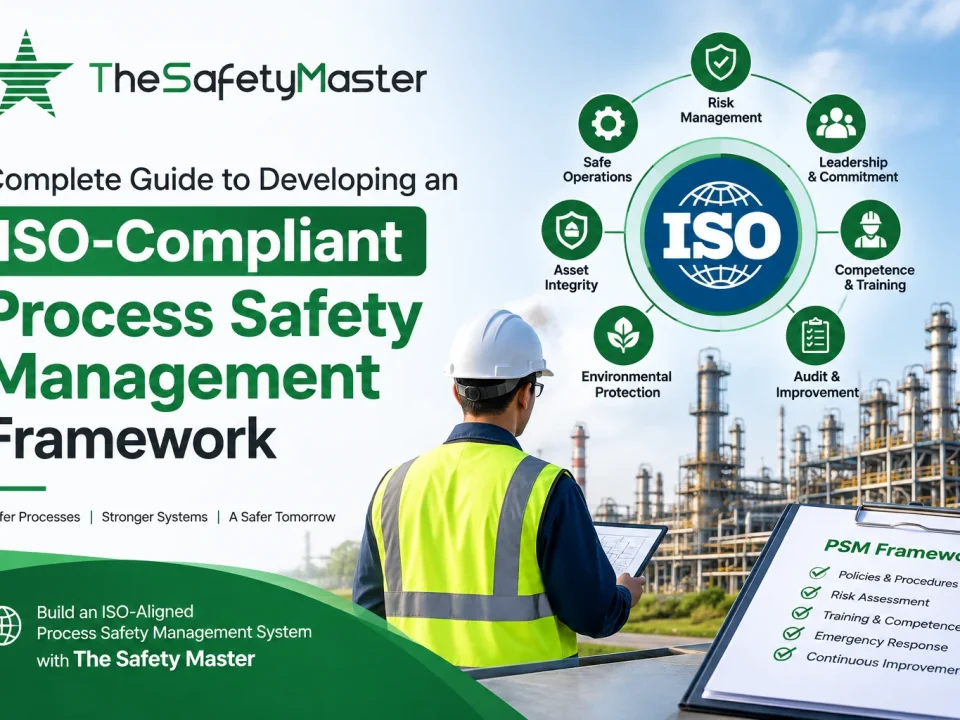
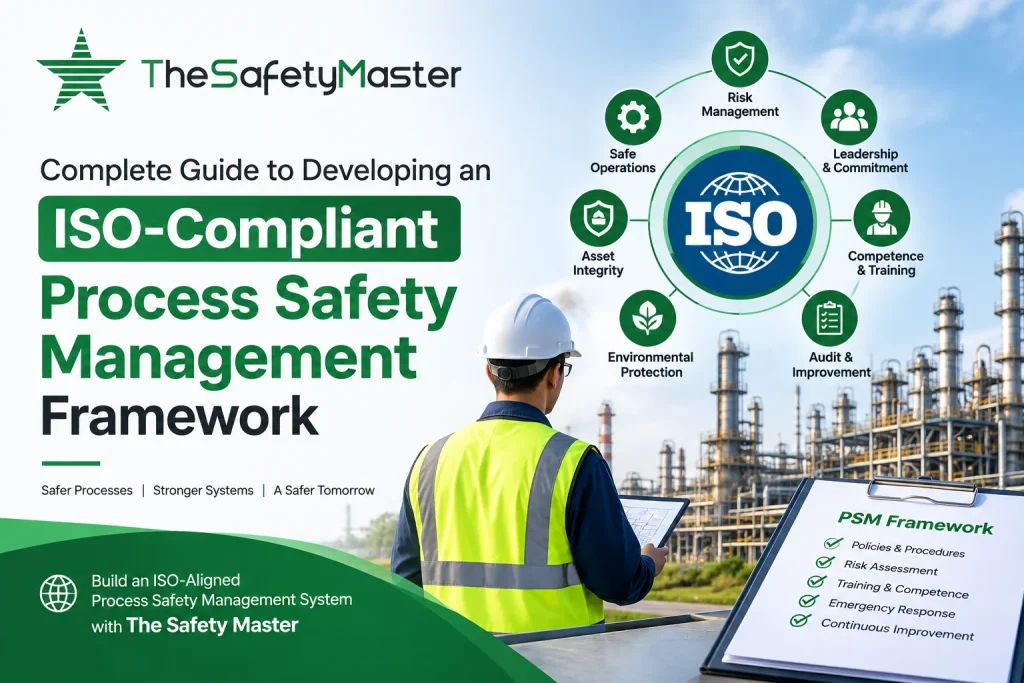
Complete Guide to Developing an ISO-Compliant Process Safety Management Framework
September 25, 2026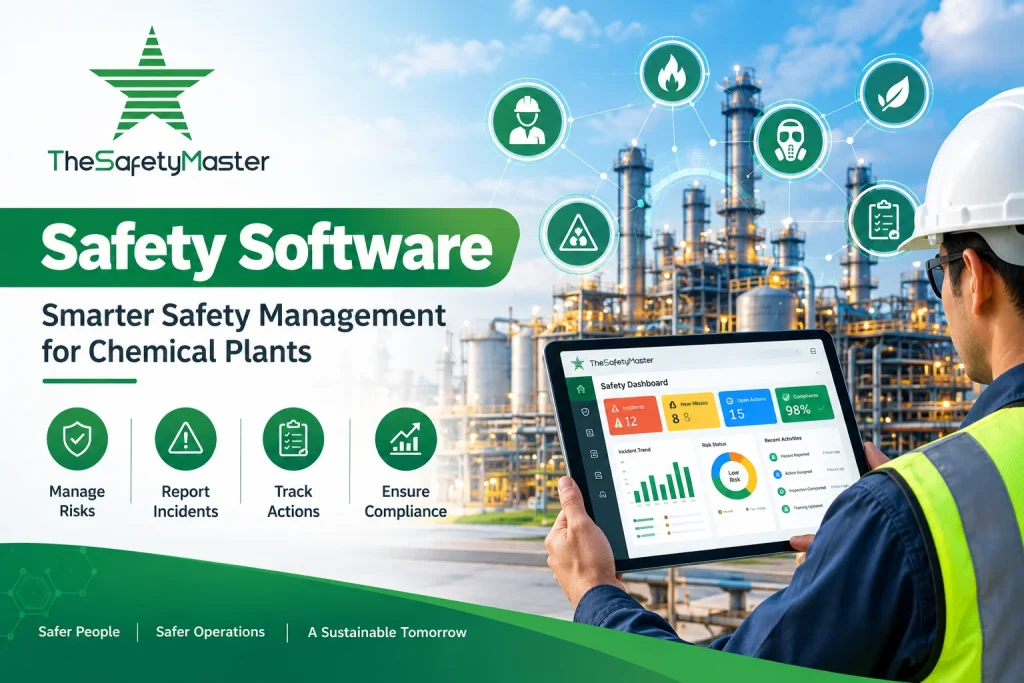
Chemical plants work with hazardous chemicals, high-pressure equipment, flammable materials, toxic substances, and complex industrial processes. A small safety issue can sometimes lead to serious injuries, equipment damage, environmental impact, or production loss. Because of these risks, chemical plants need strong systems to manage workplace safety.
Traditional spreadsheets and paper-based records can make safety management difficult when a facility has many workers, departments, contractors, inspections, and safety activities. Safety Software can bring these activities into one digital platform.
The right Safety Software helps organizations identify hazards, manage risks, report incidents, track corrective actions, conduct audits, and monitor safety performance. The Safety Master provides safety-focused solutions that can help organizations improve the way they manage EHS and workplace safety activities.
This article explains the top 10 features to look for in enterprise Safety Software for chemical plants.
Why Chemical Plants Need Safety Software
Chemical manufacturing involves multiple hazards that need continuous monitoring and control. These can include chemical exposure, fire, explosions, pressure-related hazards, electrical hazards, process hazards, and unsafe work practices.
A digital safety management system can help organizations:
- Record and track workplace hazards
- Manage risk assessments
- Report incidents and near misses
- Track corrective and preventive actions
- Schedule inspections and audits
- Manage safety documents
- Monitor safety performance
- Improve employee participation
- Maintain compliance records
- Generate management reports
The goal is not simply to store safety information. Effective Safety Software should help safety teams identify problems, assign actions, monitor progress, and make better safety decisions.
Top 10 Features of Safety Software for Chemical Plants
1. Hazard Identification and Risk Assessment
Hazard identification is an important part of chemical plant safety. Software should provide tools for identifying hazards and evaluating associated risks.
A useful system can help teams document:
- Hazard descriptions
- Potential consequences
- Existing controls
- Risk ratings
- Additional control measures
- Responsible persons
- Target completion dates
This can make risk assessment information easier to access and update.
2. Incident and Near-Miss Reporting
Chemical plants need a structured way to report incidents, accidents, unsafe conditions, and near misses.
Safety Software should allow employees to report events digitally. The system can capture information such as:
- Date and time
- Location
- People involved
- Incident type
- Description
- Immediate actions
- Photos and supporting documents
- Investigation details
Near-miss reporting is particularly useful because it allows organizations to identify warning signs before a more serious incident occurs.
3. Corrective and Preventive Action Management
Finding a safety problem is only the first step. Organizations also need to make sure corrective actions are completed.
A good system should allow safety teams to:
- Create corrective actions
- Assign responsibility
- Set deadlines
- Track progress
- Send reminders
- Upload evidence
- Verify completion
- Close actions
This creates better visibility into outstanding safety issues.
4. Safety Audits and Inspection Management
Regular inspections and audits help organizations identify unsafe conditions and verify whether safety controls are working as intended.
Safety Software should support different types of inspections, including:
- Workplace safety inspections
- Fire safety inspections
- Electrical safety inspections
- Process safety inspections
- Equipment inspections
- Contractor inspections
- Environmental inspections
Digital Audit Checklists
Digital checklists can replace paper forms and make audit information easier to organize. Managers can review findings and track actions from a centralized system.
5. Permit to Work Management
Chemical plants often perform high-risk activities such as hot work, confined space entry, electrical work, excavation, and maintenance.
A Safety Software platform with Permit to Work functionality can help manage authorization and safety requirements before work starts.
Important features may include:
- Permit creation
- Work location
- Job description
- Hazard identification
- Required precautions
- Isolation requirements
- Approvals
- Permit validity
- Permit closure
Digital permit management can also improve visibility between operations, maintenance, contractors, and safety teams.
6. Contractor Safety Management
Contractors may perform maintenance, construction, shutdown, inspection, and other activities inside chemical facilities.
Safety Software should provide tools for managing contractor safety information, such as:
- Contractor profiles
- Safety documents
- Training records
- Competency information
- Site induction
- Work permits
- Contractor inspections
- Safety performance
- Corrective actions
This helps organizations maintain a consistent process for monitoring contractor safety activities.
7. Training and Competency Management
Employees working in chemical plants may require different safety training depending on their job responsibilities.
A Safety Software platform should help organizations track:
- Employee training
- Required courses
- Training dates
- Expiry dates
- Certifications
- Competency records
- Refresher training
- Training gaps
Automatic reminders can help safety teams identify certificates or training requirements that are approaching expiry.
8. Chemical and Environmental Safety Management
Chemical facilities need to manage information related to hazardous substances and environmental responsibilities.
Depending on the software, useful capabilities may include:
- Chemical inventories
- Safety documentation
- Exposure monitoring
- Waste management
- Environmental inspections
- Compliance activities
- Chemical-related incidents
- Emergency information
Centralizing this information can make it easier for responsible teams to find important safety data.
9. Real-Time Dashboards and Safety Performance Indicators
Management teams need clear information to understand current safety performance.
Enterprise Safety Software should provide dashboards and reports covering relevant safety indicators.
These may include:
- Number of incidents
- Near-miss reports
- Open corrective actions
- Overdue actions
- Audit findings
- Inspection results
- Training status
- Permit activities
- Safety observations
Data-Driven Safety Decisions
Dashboards can help safety managers identify trends and areas that require attention. Instead of reviewing multiple spreadsheets, teams can access important information from one centralized platform.
10. Mobile Access and Easy Reporting
Safety activities do not happen only in an office. Workers and supervisors may need to report hazards or complete inspections directly from production areas.
Mobile-friendly Safety Software can allow users to:
- Report hazards
- Submit near misses
- Complete inspections
- Upload photographs
- Review assigned actions
- Access safety information
- Complete checklists
Easy-to-use mobile access can encourage greater participation from employees and supervisors.
What Makes Enterprise Safety Software Effective?
Selecting software is not only about the number of features. Chemical plants should also consider how easily the system can be used across different departments and locations.
Centralized Safety Information
All important safety records should be accessible from a centralized platform. This can reduce dependence on separate spreadsheets and paper records.
User Roles and Access Control
Large organizations need different access levels for workers, supervisors, safety professionals, managers, contractors, and administrators.
Reporting and Analytics
The system should make it easy to generate reports for management reviews, audits, inspections, and safety performance monitoring.
Scalability
Enterprise Safety Software should be able to support multiple facilities, departments, users, and safety processes as the organization grows.
Benefits of Using Safety Software in Chemical Plants
Implementing the right digital safety system can support several areas of safety management.
Key benefits include:
- Better hazard visibility
- Faster incident reporting
- Improved corrective action tracking
- Easier audits and inspections
- Better contractor management
- Improved training tracking
- Centralized safety records
- Better management reporting
- Reduced paperwork
- Improved communication between teams
However, software should support—not replace—proper risk assessment, engineering controls, competent personnel, procedures, training, and management commitment.
How The Safety Master Supports Digital Safety Management
The Safety Master focuses on workplace safety, EHS management, risk management, safety training, audits, and digital safety solutions.
For organizations looking to improve their safety processes, a digital Safety Software solution can help bring different safety activities into a structured platform.
From incident reporting and inspections to corrective actions and safety monitoring, digital tools can help safety teams manage information more efficiently and maintain better visibility of safety performance.
How to Choose the Right Safety Software for a Chemical Plant
Before selecting a platform, organizations should evaluate their actual safety requirements.
Consider:
- What safety processes need to be digitized?
- Does the system support multiple facilities?
- Can employees report incidents from mobile devices?
- Does it support risk assessments?
- Can corrective actions be tracked?
- Does it provide audit and inspection tools?
- Can contractor safety be managed?
- Does it provide dashboards and reports?
- Can users have different access permissions?
- Can the platform scale with the organization?
A proper evaluation can help chemical plants select software that matches their operational and safety requirements.
FAQs About Industrial Safety Management
What are the 7 core elements of a safety program?
The exact structure can differ between organizations and regulatory frameworks. Common core elements of an effective safety program include:
- Management leadership and commitment
- Worker participation
- Hazard identification and risk assessment
- Hazard prevention and control
- Safety training and education
- Emergency preparedness and response
- Program evaluation and continuous improvement
These elements work together to create a systematic approach to workplace safety.
What are 10 safety rules in industry?
Common industrial safety rules include:
- Follow established safety procedures.
- Wear the required personal protective equipment.
- Report hazards and unsafe conditions.
- Never bypass safety devices or guards.
- Use the correct tools and equipment.
- Follow lockout/tagout or applicable isolation procedures.
- Maintain good housekeeping.
- Follow permit-to-work requirements for high-risk activities.
- Report incidents and near misses.
- Take part in required safety training.
The exact rules should be adapted to the hazards, equipment, processes, and legal requirements of each workplace.
What are the 14 elements of a safety management system?
The phrase “14 elements” is commonly associated with OSHA’s Process Safety Management (PSM) standard for covered highly hazardous chemical processes. The elements are:
- Employee participation
- Process safety information
- Process hazard analysis
- Operating procedures
- Training
- Contractors
- Pre-startup safety review
- Mechanical integrity
- Hot work permit
- Management of change
- Incident investigation
- Emergency planning and response
- Compliance audits
- Trade secrets
Organizations should determine which regulatory requirements apply to their specific facility and operations.
What is EHS software used for?
EHS software is used to digitally manage Environmental, Health, and Safety activities. Depending on the platform, it can support incident reporting, risk assessments, audits, inspections, corrective actions, training, environmental management, compliance tracking, contractor management, and safety reporting.
For chemical plants, EHS software can provide a centralized way to manage safety information and monitor important activities across departments and facilities.
Conclusion
Chemical plants require strong systems to identify hazards, manage risks, investigate incidents, track corrective actions, and monitor safety performance. The right Safety Software can bring these activities together in one digital platform and improve visibility across the organization.
When evaluating enterprise software, chemical plants should look beyond basic record keeping and consider features such as risk assessment, incident management, audits, permit management, contractor safety, training, dashboards, and mobile access.
With the right technology and effective safety processes, The Safety Master can help organizations move toward more structured and efficient digital safety management.