Top Safety auditing Company of India – The Safety Master

Material Handling Safety Audit
September 1, 2023
Top HAZOP Study Consultant in India TheSafetyMaster
September 2, 2023
Workplace safety is important for every industry, including manufacturing plants, construction sites, warehouses, commercial buildings, hotels, hospitals, and other workplaces. A proper safety audit helps organizations identify hazards, check safety practices, and improve compliance.
The Safety Master provides professional safety auditing services to help organizations identify unsafe conditions, evaluate existing safety systems, and develop practical measures for improving workplace safety.
What Is a Safety Audit?
A safety audit is a systematic review of workplace safety practices, procedures, equipment, and systems. It helps identify hazards and areas where safety requirements may not be properly implemented.
A professional audit can examine areas such as:
- Workplace hazards
- Fire and life safety
- Electrical safety
- Machinery safety
- Chemical safety
- Personal protective equipment
- Emergency preparedness
- Occupational health and safety
- Permit-to-work systems
- Safety documentation
- Training and awareness
- Legal and regulatory compliance
The objective is to identify gaps before they result in incidents, injuries, property damage, or operational disruption.
Why Choose a Professional Safety Auditing Company?
Organizations may have safety procedures in place, but regular audits help determine whether those procedures are actually being followed.
A professional Safety Auditing Company can provide an independent review of existing safety practices and identify areas requiring improvement.
Identify Workplace Hazards
Audits help identify unsafe acts, unsafe conditions, equipment-related hazards, fire risks, electrical hazards, and other workplace risks.
Improve Safety Compliance
A safety audit can help organizations review their safety systems against applicable requirements, standards, procedures, and internal policies.
Reduce Safety Risks
Identifying hazards at an early stage allows organizations to implement suitable corrective and preventive actions.
Improve Safety Awareness
Audit findings can highlight areas where employees, supervisors, and managers may require additional safety training or awareness.
Safety Auditing Services by The Safety Master
The Safety Master provides safety consulting and auditing support for organizations across different industries.
The audit scope can be developed according to the organization’s activities, workplace conditions, risk profile, and specific requirements.
Workplace Safety Audit
A workplace safety audit reviews general workplace conditions, employee practices, housekeeping, PPE, emergency arrangements, and other safety-related areas.
Fire Safety Audit
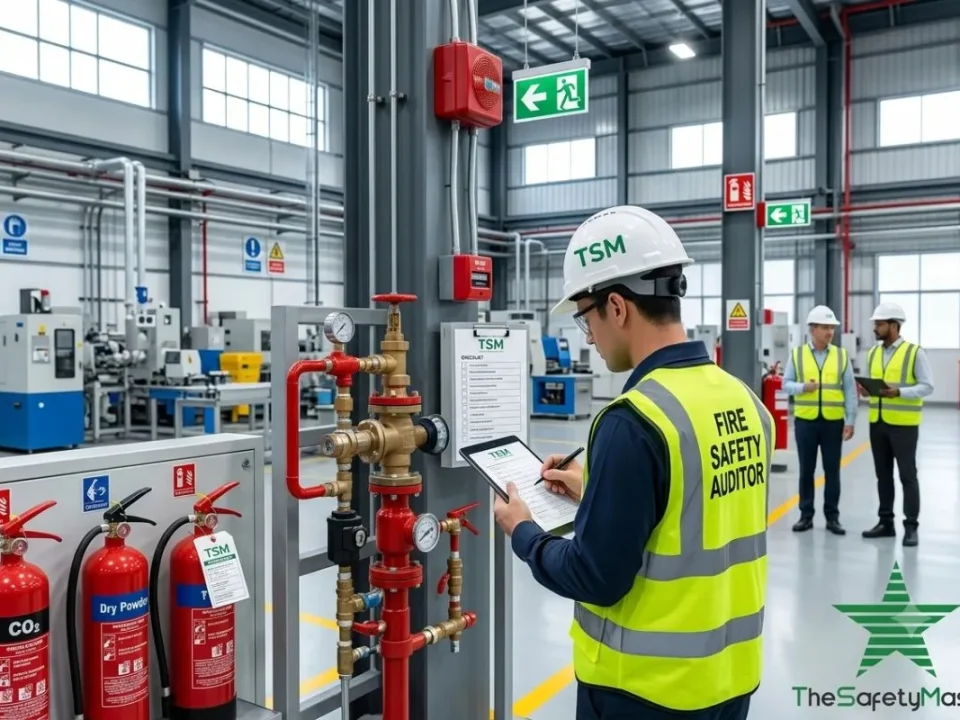
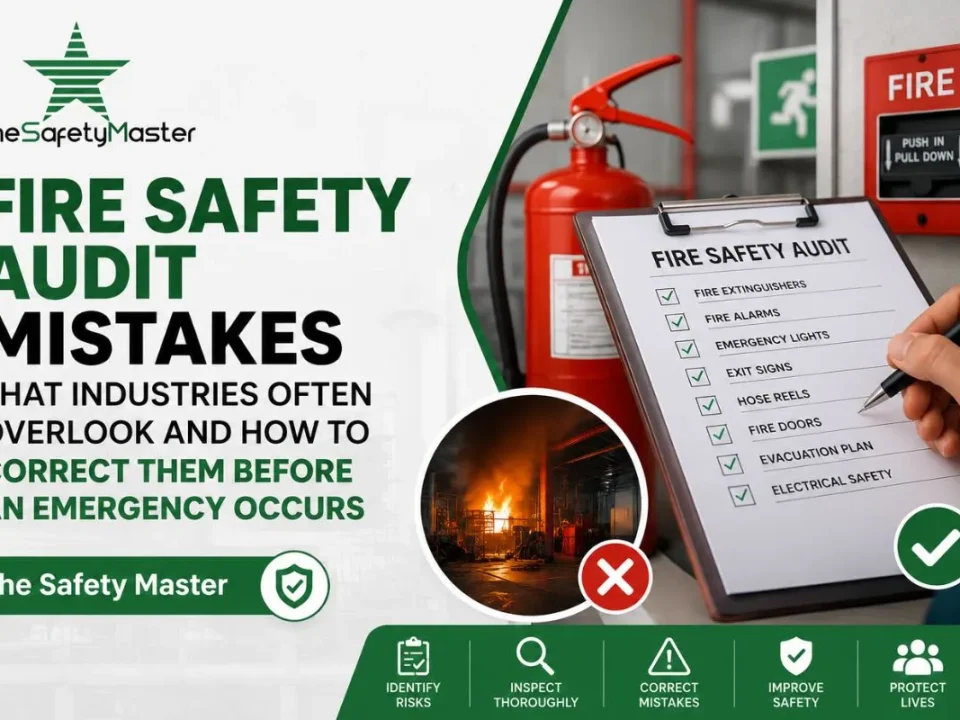
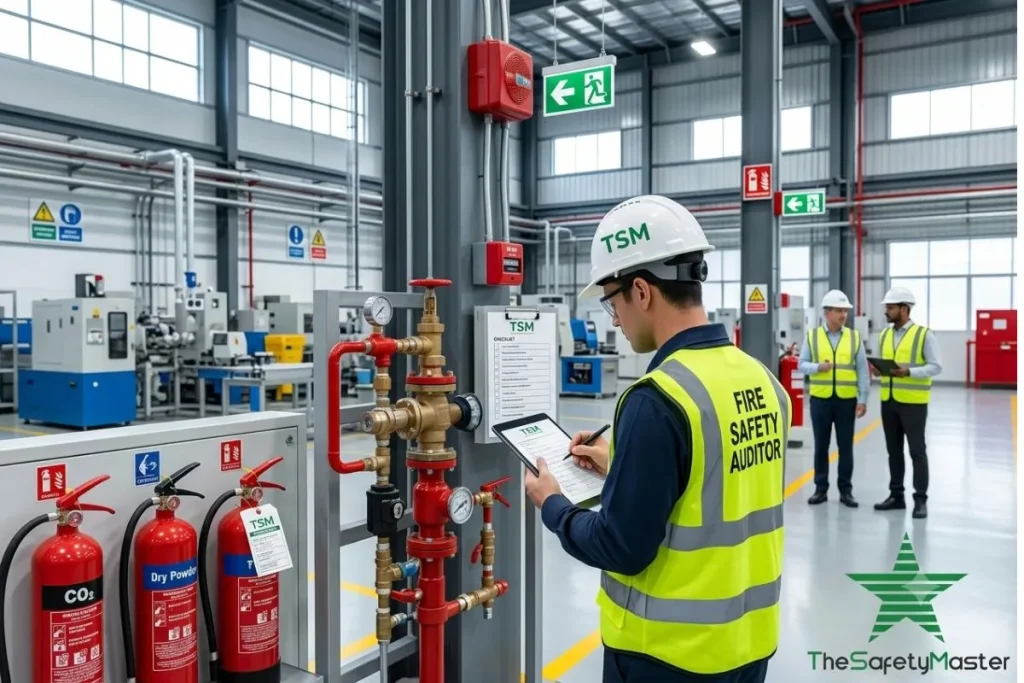
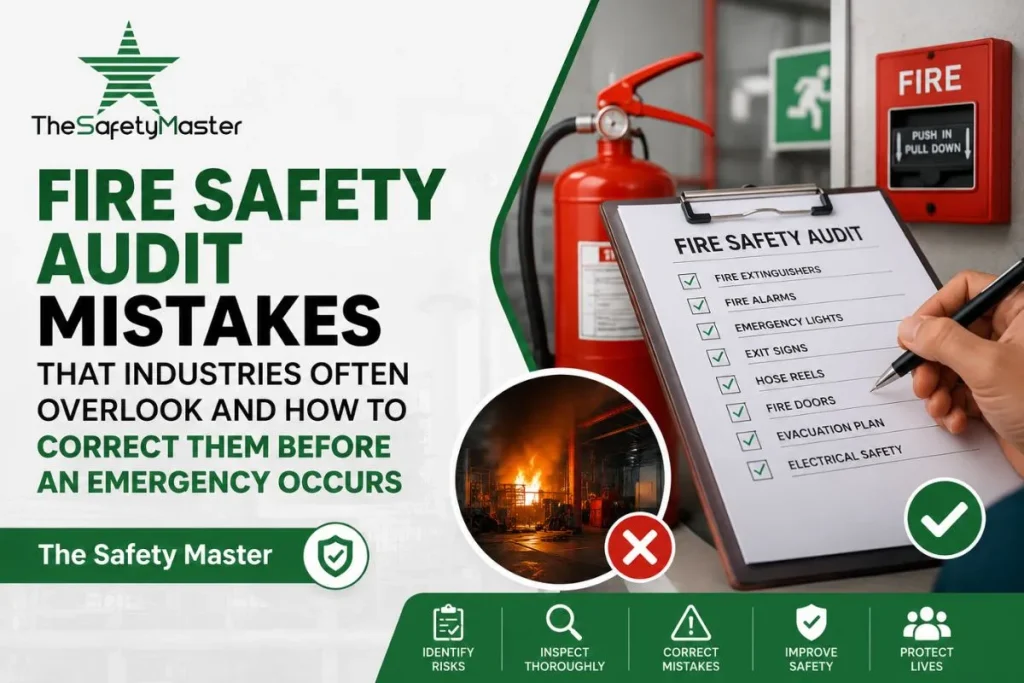
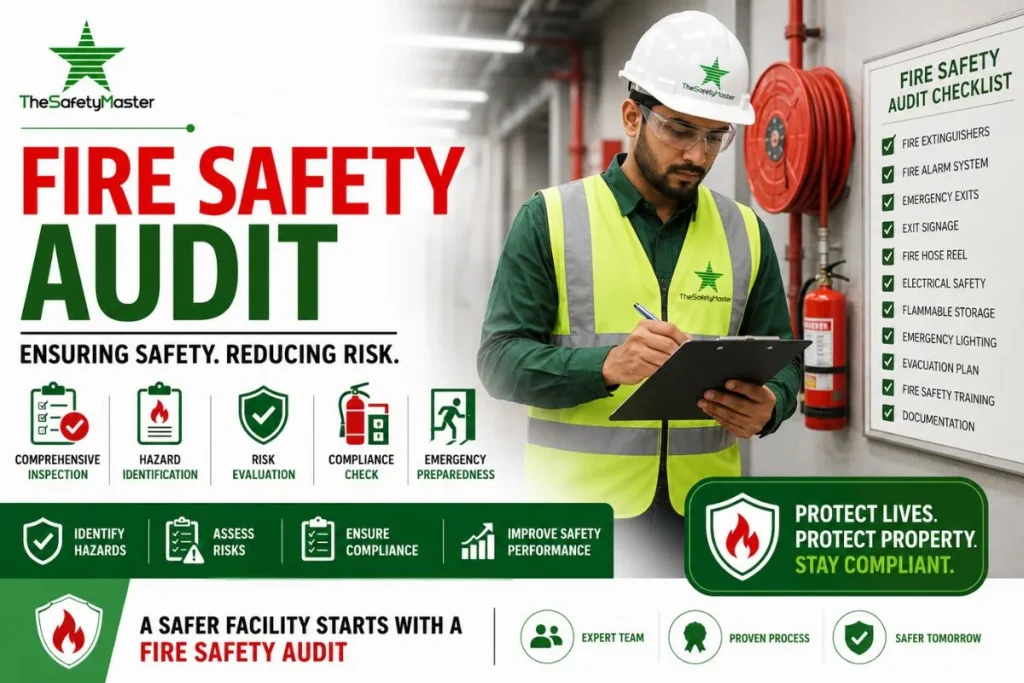
A fire safety audit evaluates fire prevention and protection arrangements, emergency exits, fire extinguishers, fire detection systems, emergency procedures, and other relevant fire safety measures.
Electrical Safety Audit
An electrical safety audit focuses on electrical installations, panels, cables, earthing, protection systems, electrical equipment, and unsafe electrical practices.
Industrial Safety Audit
Industrial safety audits examine workplace hazards associated with machinery, production processes, chemicals, material handling, maintenance activities, and other industrial operations.
Occupational Safety Audit
An occupational safety audit reviews workplace practices that can affect employee health and safety, including exposure risks, PPE, work procedures, training, and safety management practices.
How The Safety Master Conducts a Safety Audit
A structured audit process helps ensure that important safety areas are reviewed.
1. Pre-Audit Planning
The audit team first understands the organization’s activities, processes, workplace layout, available documents, and audit requirements.
2. Site Inspection
A physical inspection is conducted to identify unsafe conditions and potential hazards.
3. Document Review
Relevant safety documents, procedures, permits, inspection records, training records, emergency plans, and other available documentation may be reviewed.
4. Employee and Management Interaction
Discussions with employees, supervisors, and management can help understand how safety procedures are implemented in daily operations.
5. Risk and Compliance Gap Identification
Observed conditions and practices are evaluated to identify safety gaps and areas requiring corrective action.
6. Audit Report
The findings are documented in an audit report. The report can include observations, risk areas, photographs where appropriate, and recommended corrective actions.
7. Corrective Action
The organization can use the audit findings to establish corrective and preventive actions and improve its safety management system.
Benefits of Safety Auditing
Regular safety audits can provide several practical benefits to an organization.
- Helps identify workplace hazards
- Supports safety compliance
- Improves safety procedures
- Strengthens emergency preparedness
- Helps reduce unsafe conditions
- Improves employee safety awareness
- Supports corrective and preventive actions
- Helps management monitor safety performance
- Strengthens overall safety management
- Helps prevent avoidable incidents
Industries That Can Benefit From Safety Audits
Safety auditing can be useful across a wide range of industries and workplaces.
Manufacturing Industries
Manufacturing facilities may require audits covering machinery, electrical systems, chemicals, production activities, material handling, fire safety, and emergency preparedness.
Construction Sites
Construction safety audits can review work at height, scaffolding, excavation, lifting operations, electrical safety, PPE, housekeeping, and other construction hazards.
Warehouses and Logistics
Audits can cover material storage, forklift operations, loading and unloading, emergency exits, fire protection, housekeeping, and workplace traffic management.
Commercial Buildings
Commercial facilities can be reviewed for fire safety, electrical safety, emergency preparedness, housekeeping, and other workplace risks.
Hotels and Hospitality
Hotels and hospitality facilities can benefit from audits covering fire safety, kitchens, electrical systems, emergency procedures, guest safety, and employee safety.
Why Safety Audits Should Be Conducted Regularly
A workplace changes over time. New equipment may be installed, processes may change, employees may change, and new hazards may appear.
Regular safety audits help organizations identify these changes and review whether existing safety controls remain effective.
An audit should therefore be treated as part of continuous safety improvement rather than a one-time activity.
The Safety Master – Safety Auditing Support in India
The Safety Master supports organizations with professional safety consulting, auditing, risk assessment, training, and related HSE services.
Its safety audit approach can be tailored to the organization’s industry, activities, workplace conditions, and audit objectives.
Organizations looking for a Safety Auditing Company can use a structured audit to understand their current safety performance, identify gaps, and develop practical improvement actions.
How to Select a Safety Auditing Company
Before selecting a safety auditing service provider, organizations should consider:
- Relevant industry experience
- Scope of auditing services
- Technical expertise
- Safety professionals involved in the audit
- Audit methodology
- Quality of reporting
- Understanding of applicable requirements
- Ability to provide practical recommendations
- Experience with similar workplace hazards
A suitable audit provider should understand the organization’s actual operations rather than simply provide a generic checklist.
Frequently Asked Questions
Q-What is a safety auditing company?
A safety auditing company provides professional services to evaluate workplace safety systems, identify hazards, review compliance, and recommend corrective actions.
Q-Why is a safety audit important?
A safety audit helps organizations identify unsafe conditions and practices, review existing safety controls, and find opportunities to improve workplace safety.
Q-What does a safety audit cover?
Depending on the audit scope, it can cover fire safety, electrical safety, machinery, PPE, emergency preparedness, workplace conditions, documentation, training, and other HSE requirements.
Q-How often should a safety audit be conducted?
The frequency depends on the organization’s activities, hazards, legal requirements, internal procedures, and risk profile. Higher-risk workplaces may require more frequent reviews.
Q-Does The Safety Master provide safety auditing services?
Yes. The Safety Master provides safety consulting and auditing services that can be tailored to different industries, workplaces, and safety requirements.
Q-Can safety audits help improve compliance?
Yes. A safety audit can identify gaps between existing workplace practices and applicable requirements, allowing the organization to plan suitable corrective actions.
Q-What is the difference between a safety audit and a safety inspection?
A safety inspection generally focuses on identifying unsafe conditions and practices at a workplace, while a safety audit is usually a more systematic review of safety systems, procedures, documentation, controls, and implementation.
Q-Who should conduct a safety audit?
A safety audit should be conducted by competent and appropriately experienced safety professionals with knowledge relevant to the workplace, processes, and hazards being assessed.
Conclusion
A professional safety audit can help organizations identify hazards, understand safety gaps, improve workplace practices, and strengthen their overall safety management approach. Choosing an experienced Safety Auditing Company can make the audit process more structured and useful for corrective action.
The Safety Master provides safety auditing and consulting support designed around the specific requirements and risks of different workplaces.