Ways Safety Software Has Helped Reduce Workplace Injuries

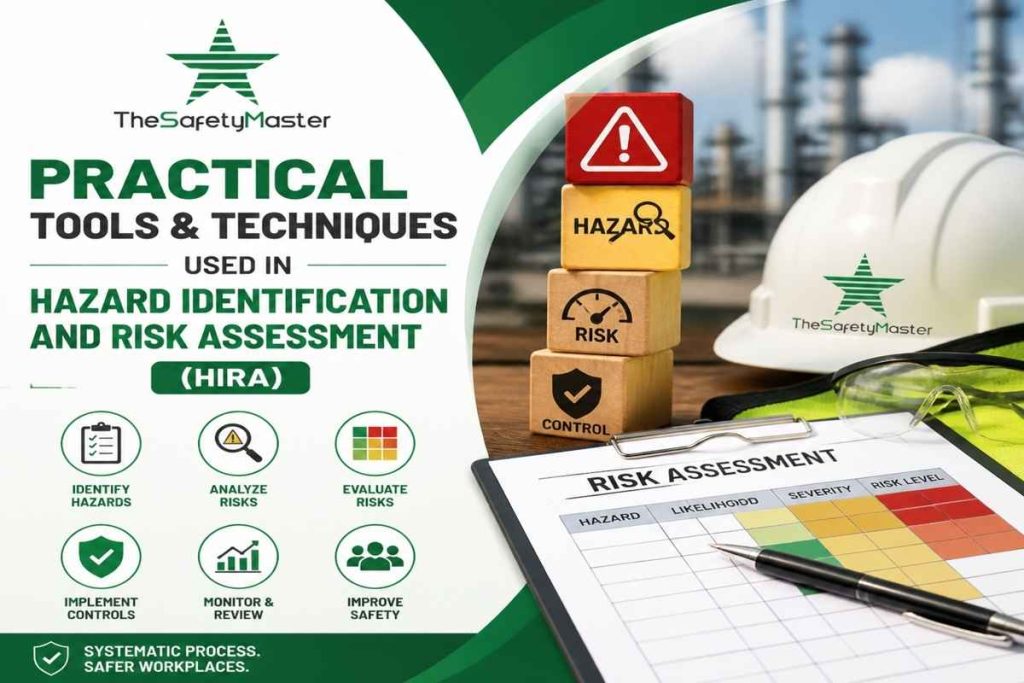
How to Conduct a Hazard Identification and Risk Assessment
January 25, 2022
How to do a Quantitative Risk Assessment (QRA)
February 5, 2022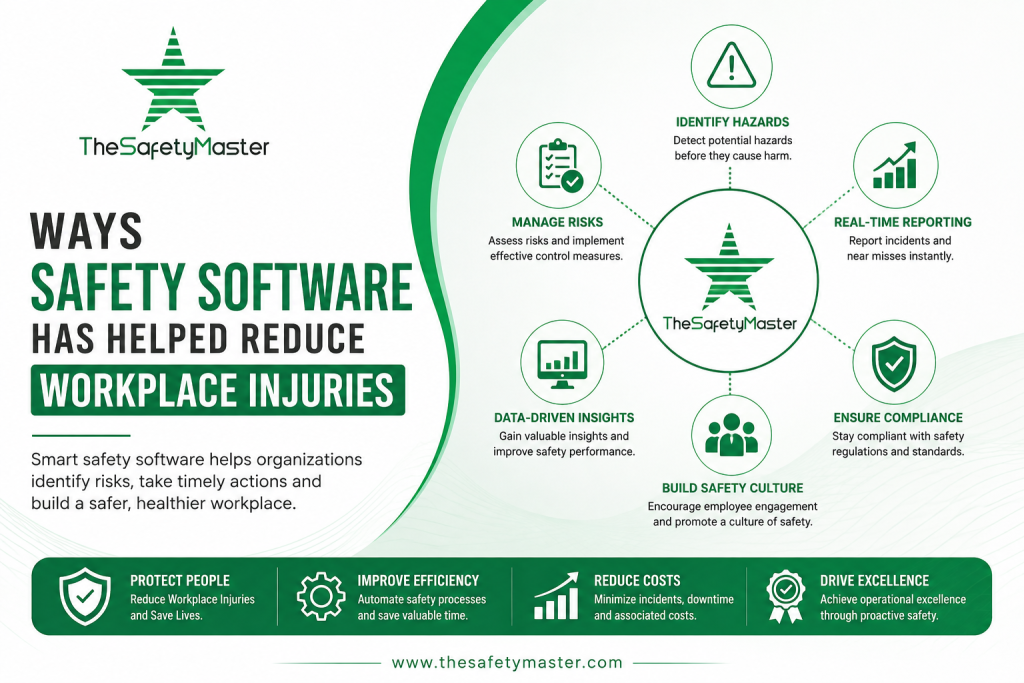
Workplace injuries can affect employees, productivity, business continuity, and overall safety performance. Organizations today are using safety software to identify hazards earlier, manage risks, improve safety reporting, track corrective actions, and create a stronger safety culture. Digital safety tools help EHS teams replace manual processes with organized, data-driven safety management.
The Safety Master provides digital safety solutions that can support organizations in areas such as HAZOP, Behavior-Based Safety (BBS), Permit to Work, safety audits, and safety performance management. The goal is simple: identify problems before they become incidents and help organizations build safer workplaces.
How Safety Software Helps Reduce Workplace Injuries
Safety software does not replace safety professionals or physical controls. Instead, it gives safety teams better information and faster ways to manage hazards. From reporting near misses to tracking corrective actions, digital systems can make safety processes more consistent and visible.
1. Faster Hazard Identification
One of the most important ways safety software helps prevent injuries is by making hazard identification easier.
Employees and supervisors can record unsafe conditions, observations, hazards, and near misses through a centralized system. Safety teams can then review the information, assess the risk, and assign corrective actions.
A proactive approach helps organizations address hazards before they result in workplace injuries.
2. Better Risk Assessment and Management
Manual risk assessments can become difficult to manage when an organization has multiple departments, locations, contractors, or projects.
Safety software can help teams:
- Identify workplace hazards
- Assess risk levels
- Assign responsible persons
- Define control measures
- Track action status
- Monitor overdue actions
- Maintain digital records
This makes risk management more structured and helps organizations focus on high-priority hazards.
3. Improved Incident and Near-Miss Reporting
Near misses are valuable safety indicators because they can reveal weaknesses before a serious accident occurs.
With safety software, employees can report incidents, unsafe acts, unsafe conditions, and near misses more efficiently. Safety managers can investigate events, identify root causes, assign corrective actions, and monitor completion.
A strong reporting system encourages organizations to learn from events rather than simply react after an injury.
4. Real-Time Safety Data and Dashboards
Paper records and spreadsheets can make it difficult for management to understand current safety performance.
Modern safety software can provide dashboards showing information such as:
- Incidents and near misses
- Open corrective actions
- Safety observations
- Audit findings
- Training status
- Risk levels
- Compliance performance
This gives management a clearer picture of workplace safety and helps them make decisions based on current information.
Safety Software Improves Employee Safety Training
Centralized Training Management
Employee training is a key part of injury prevention. Workers need to understand hazards, safe operating procedures, emergency requirements, PPE, and task-specific controls.
A safety software platform can help organizations maintain training records and monitor whether employees have completed required courses.
Training Reminders and Competency Tracking
Digital systems can help safety teams track:
- Training completion
- Expiry dates
- Refresher training
- Employee competency
- Department-wise training requirements
This reduces the possibility of important training requirements being overlooked.
Safety Software Helps Improve Equipment Safety
Digital Inspection Scheduling
Unsafe equipment can contribute to serious workplace incidents. Regular inspections and preventive maintenance are therefore essential.
Safety software can help schedule equipment inspections and record findings digitally.
Tracking Defects and Corrective Actions
When an inspection identifies a defect, the issue can be documented and assigned to the responsible person. Managers can then monitor the action until closure.
This creates better visibility over equipment-related safety risks.
Safety Software Supports Compliance Management
Organizations must meet applicable workplace safety requirements, internal procedures, and industry standards. Poor compliance management can increase operational and legal risks.
Safety software can help organizations maintain inspection records, audit findings, training records, corrective actions, and other safety documentation in an organized manner.
Maintain Better Safety Records
Digital records make it easier to retrieve historical information during internal reviews, audits, and management meetings.
Instead of searching through multiple files, safety teams can access relevant information from a centralized platform.
Safety Software Strengthens Safety Audits
Digital Audit Checklists
Safety audits are more effective when findings are properly recorded and followed through to completion.
Safety audit software can help teams:
- Create inspection or audit checklists
- Conduct audits digitally
- Record observations
- Attach supporting evidence
- Assign corrective actions
- Set deadlines
- Track closure
- Generate reports
Monitor Repeated Safety Issues
Data collected through multiple audits can help organizations identify recurring problems. If the same issue repeatedly appears, management can investigate the underlying cause and introduce stronger controls.
Safety Software Supports Behavior-Based Safety
Encourage Positive Safety Observations
Behavior-Based Safety focuses on observing workplace behaviors and identifying opportunities for improvement.
Digital BBS software can help organizations record observations, analyze trends, and identify unsafe or safe behaviors.
Build a Proactive Safety Culture
When employees can easily report observations and participate in safety programs, safety becomes more collaborative. Management can use the collected data to recognize positive behaviors and address recurring unsafe practices.
Safety Software for Permit to Work Management
High-risk activities often require proper authorization and control before work begins.
A digital Permit to Work system can help organizations manage permits for activities such as:
- Hot work
- Confined space entry
- Electrical work
- Work at height
- Excavation
- Maintenance activities
Digital permit workflows can improve visibility, authorization, documentation, and coordination between responsible teams.
How Safety Software Helps Prevent Workplace Injuries
The major benefit of safety software is its ability to connect different safety activities into one organized system.
A typical safety management process can work like this:
Identify Hazard → Assess Risk → Implement Controls → Report Observations → Track Actions → Analyze Data → Improve Safety
This continuous process helps organizations move from reactive accident management toward proactive risk prevention.
Key Benefits of Safety Software
Organizations can benefit from safety software through:
Improved Hazard Visibility
Potential hazards can be documented and monitored before they become incidents.
Faster Corrective Action
Responsibilities and deadlines can be assigned clearly.
Better Safety Reporting
Employees can report incidents, near misses, and observations more efficiently.
Improved Compliance
Safety documentation and records can be maintained systematically.
Data-Driven Decisions
Dashboards and reports help management identify trends and priorities.
Stronger Safety Culture
Employees and managers can participate more actively in workplace safety.
What Safety Software Should an Organization Choose?
The right platform depends on the organization’s industry, workforce size, risk profile, and safety objectives.
Before selecting software, organizations should evaluate whether it supports:
- Incident management
- Near-miss reporting
- HIRA and risk assessment
- Safety inspections
- Audit management
- Corrective action tracking
- Training management
- BBS
- Permit to Work
- HAZOP
- Dashboards and analytics
- Mobile accessibility
- Reporting and documentation
A good safety software solution should make safety processes easier rather than adding unnecessary complexity.
How The Safety Master Can Help
The Safety Master offers safety-focused digital solutions designed to support organizations in improving their safety management processes. Its digital solutions include BBS Software, HAZOP Software, Work Permit Software, Safety Audit Software, and dashboards and analytics.
Organizations can combine digital tools with safety training, audits, risk assessments, and professional safety consultancy to develop a more proactive approach to workplace risk management.
Conclusion
Safety software has become an important tool for organizations looking to reduce workplace injuries and improve safety performance. By supporting hazard identification, risk assessment, incident reporting, employee training, equipment inspections, audits, corrective actions, and compliance management, digital safety systems can help organizations identify problems earlier and respond more effectively.
However, technology works best when combined with competent safety professionals, employee involvement, strong procedures, effective training, and appropriate engineering and administrative controls. With the right approach, The Safety Master can help organizations use digital safety solutions to build a more proactive, measurable, and sustainable workplace safety culture.
FAQs
Q-What is safety software?
Safety software is a digital platform used to manage workplace health and safety activities. It can support incident reporting, risk assessments, audits, inspections, training, corrective actions, compliance, and safety analytics.
Q-How does safety software reduce workplace injuries?
Safety software helps organizations identify hazards, report near misses, manage risks, track corrective actions, monitor inspections, and improve employee training. These activities can help address safety problems before they contribute to workplace injuries.
Q-What are the benefits of safety management software?
Key benefits include better hazard visibility, faster reporting, centralized records, corrective action tracking, improved compliance management, safety performance analytics, and stronger employee engagement.
Q-Can safety software help with safety audits?
Yes. Safety audit software can support digital checklists, inspection findings, evidence collection, corrective actions, deadlines, and audit reporting.
Q-Can safety software manage employee training?
Yes. Training management functionality can help organizations track employee training, refresher requirements, competency, completion status, and upcoming expiry dates.
Q-What types of safety software are available?
Common solutions include incident management software, BBS software, HIRA/risk assessment software, HAZOP software, Permit to Work software, safety audit software, training management systems, and safety dashboards.
Q-Is safety software suitable for manufacturing companies?
Yes. Manufacturing organizations can use safety software to manage workplace hazards, inspections, incidents, audits, training, equipment safety, corrective actions, and other EHS activities.
Q-How can The Safety Master help with safety software?
The Safety Master provides digital safety solutions including BBS, HAZOP, Permit to Work, Safety Audit, and safety analytics solutions, along with safety training and consultancy services.