Crucial Safety Topics to Involve In Your Employee Safety Training Program

Quantitative Risk Assessment
May 3, 2023
Importance for electrical safety in industries
May 4, 2023
Employee safety training is essential for creating a safe, productive, and responsible workplace. A well-designed Employee Safety Training program helps workers understand workplace hazards, follow safe operating procedures, respond to emergencies, and reduce the possibility of accidents and injuries.
Different industries have different risks, so training should be based on the actual hazards employees may encounter. The Safety Master provides safety training, audits, risk assessment, and process safety solutions that can help organizations develop stronger workplace safety practices.
Why Is Employee Safety Training Important?
Safety training gives employees the knowledge and practical skills required to perform their jobs safely. It also helps organizations build a stronger safety culture where employees understand their responsibilities.
Regular training can help organizations:
- Identify workplace hazards
- Reduce accidents and injuries
- Improve emergency preparedness
- Increase employee awareness
- Encourage safe work practices
- Improve compliance with applicable safety requirements
- Strengthen the overall safety culture
A good training program should not be limited to new employees. Refresher training should also be provided when procedures, equipment, regulations, or workplace conditions change.
Crucial Topics for an Employee Safety Training Program
1. Fire Safety and Emergency Response
Fire safety should be an important part of every workplace training program. Employees should understand common causes of workplace fires and know what to do when a fire occurs.
Training can cover:
- Fire prevention
- Types of fire
- Fire extinguisher awareness
- Emergency alarms
- Evacuation procedures
- Emergency exits
- Assembly points
- Fire emergency responsibilities
- Basic emergency response
Employees should also understand why emergency exits must remain accessible and how to respond without creating additional risks.
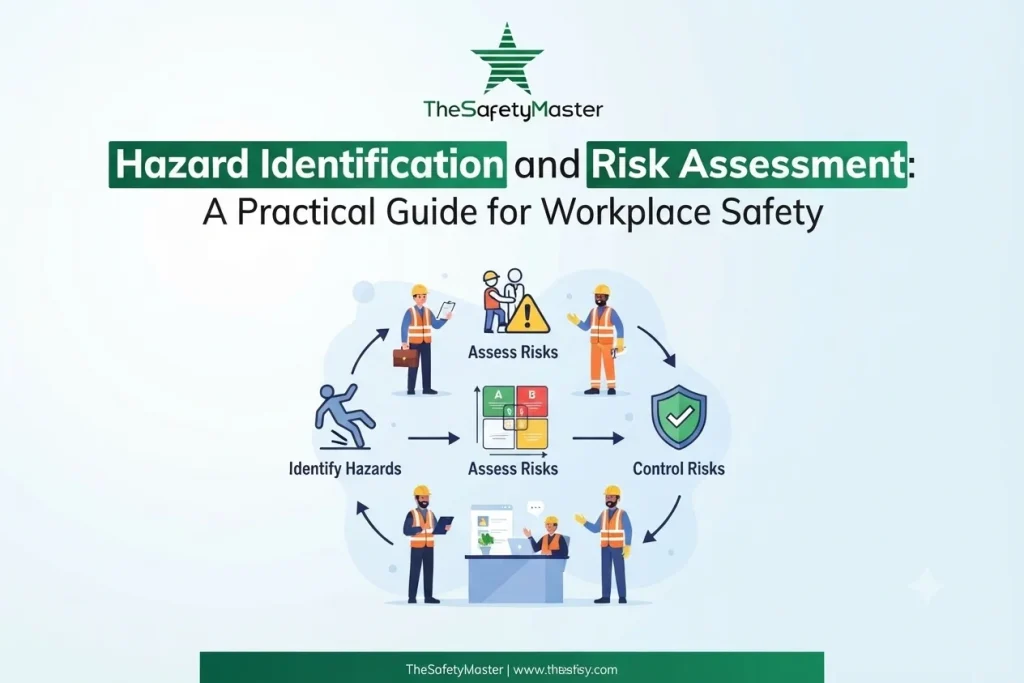
2. Hazard Identification and Risk Assessment
Employees should be trained to recognize hazards before they result in an incident.
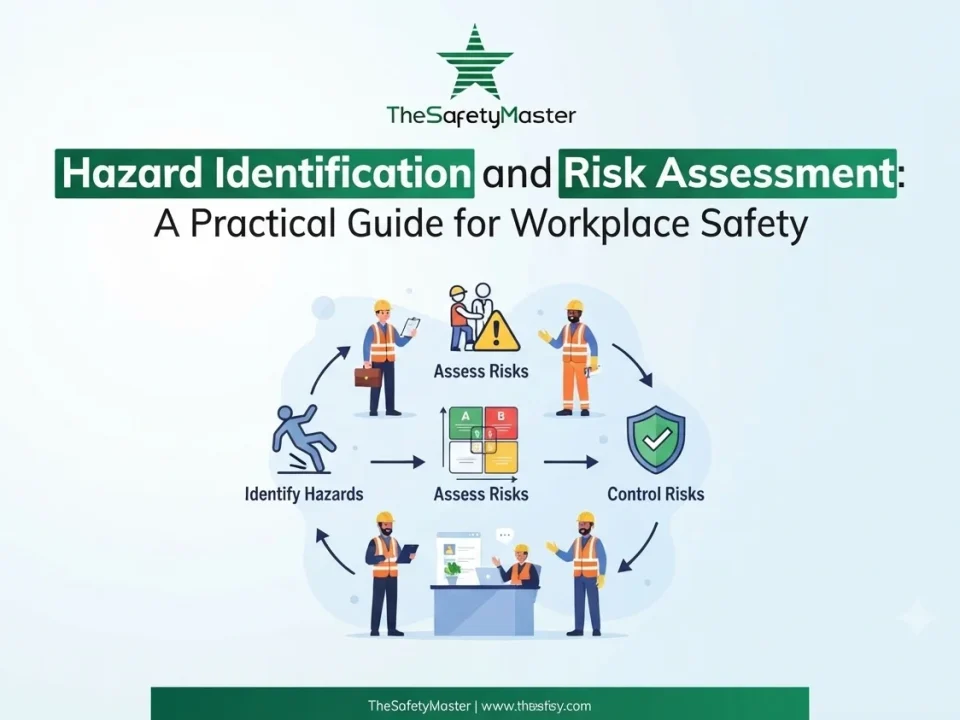
Hazard Identification and Risk Assessment (HIRA) training can help workers understand:
- How to identify hazards
- How to assess risk
- Risk likelihood and severity
- Existing control measures
- Additional control measures
- Hierarchy of controls
- Reporting unsafe conditions
Practical examples from the employee’s actual workplace can make this training more effective.
3. Behavior-Based Safety
Unsafe behavior can contribute to workplace incidents. Behavior-Based Safety training focuses on identifying safe and unsafe behaviors and encouraging employees to make safer decisions.
Employees can learn how to:
- Recognize unsafe acts
- Give constructive safety feedback
- Follow safe work procedures
- Report unsafe behavior
- Encourage positive safety practices
- Take personal responsibility for safety
A strong safety culture requires employees and supervisors to work together rather than treating safety as the responsibility of one department.
4. Electrical Safety
Electrical hazards can cause electric shock, burns, fires, equipment damage, and serious injuries.
Employee safety training should cover:
- Electrical hazard identification
- Safe use of electrical equipment
- Damaged cables and plugs
- Grounding and earthing awareness
- Lockout/Tagout principles
- Electrical work restrictions
- Arc-flash awareness where applicable
- Emergency response to electrical incidents
Only appropriately authorized and competent personnel should perform specialized electrical work.
5. Personal Protective Equipment
Employees should understand when and how PPE must be used.
Training can include:
- Safety helmets
- Safety shoes
- Gloves
- Eye protection
- Face shields
- Hearing protection
- Respiratory protection
- Protective clothing
- PPE inspection and maintenance
Employees should understand that PPE is an important control measure but should not replace effective hazard elimination or engineering controls where those controls are feasible.
Process Safety Management Training
Employees working in process industries may face hazards involving flammable, toxic, reactive, or pressurized materials. Process Safety Management (PSM) training helps employees understand the systems used to prevent major incidents.
Important subjects can include:
- Process hazards
- Operating procedures
- Mechanical integrity
- Management of change
- Emergency planning
- Permit-to-work systems
- Process safety information
- Incident investigation
- Pre-startup safety review
The exact training requirements should be adapted to the employee’s role and the hazards of the facility.
HAZOP Awareness and Training
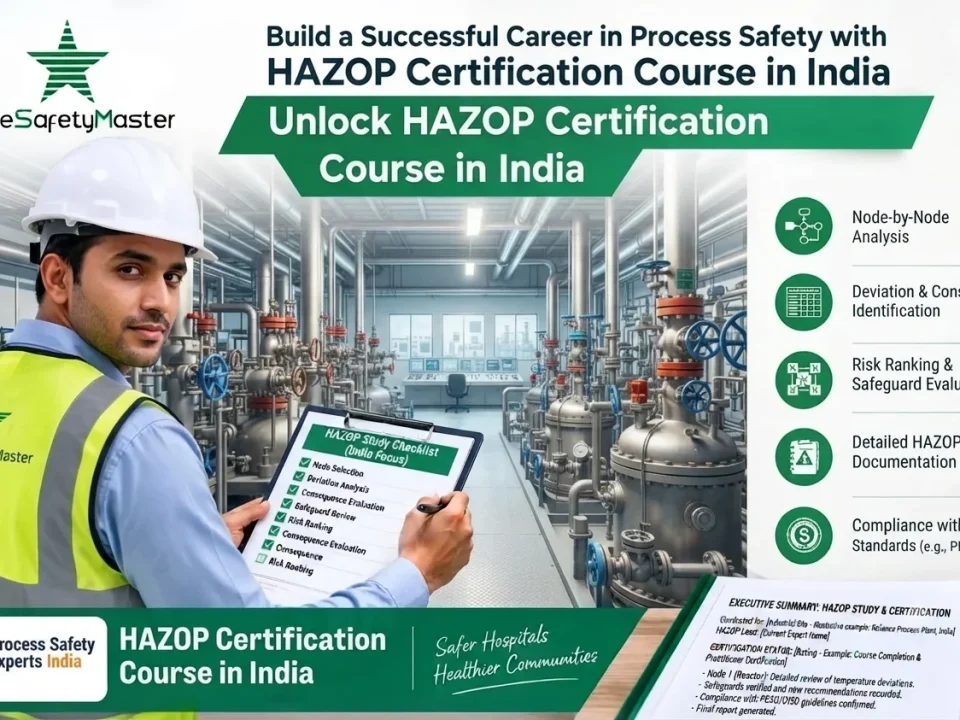
HAZOP Training can be particularly valuable for employees involved in process operations, engineering, maintenance, and process safety.
Employees can learn about:
- HAZOP principles
- Guide words
- Deviations
- Causes and consequences
- Existing safeguards
- Recommendations
- Team participation
- Follow-up of HAZOP actions
Training should help participants understand how systematic hazard identification supports safer plant design and operation.
Safety Audit Awareness
Safety audit training helps employees understand how workplace safety performance is evaluated.
Employees can learn about:
- Workplace inspections
- Safety observations
- Compliance checks
- Unsafe conditions
- Corrective actions
- Documentation
- Follow-up actions
A safety audit should not simply be viewed as an inspection. It can also help organizations identify opportunities for continual improvement.
Work at Height Safety
Falls from height can result in severe injuries or fatalities. Employees performing or supervising work at height should receive appropriate training before undertaking such activities.
Key topics include:
- Fall hazards
- Safe access
- Scaffolding safety
- Ladders
- Full-body harnesses
- Anchorage systems
- Guardrails
- Work-at-height permits
- Rescue planning
- Inspection requirements
Material Handling and Manual Handling
Incorrect material handling can result in strains, musculoskeletal injuries, dropped objects, and equipment damage.
Training should address:
- Correct lifting techniques
- Manual handling risks
- Safe use of lifting equipment
- Load limits
- Storage practices
- Safe movement of materials
- Ergonomic considerations
Lockout/Tagout and Energy Isolation
Employees should understand how hazardous energy can cause unexpected machine movement, electrical shock, pressure release, or other dangerous events.
Training may cover:
- Identification of energy sources
- Isolation procedures
- Lockout and tagout
- Verification of zero energy
- Authorized and affected employees
- Restart procedures
Chemical Safety and Hazardous Material Handling
Employees who work with chemicals should understand the hazards associated with the materials they handle.
Training should cover:
- Chemical labels
- Safety Data Sheets
- Storage requirements
- Handling procedures
- Chemical incompatibilities
- Spill response
- Exposure prevention
- Required PPE
- Emergency response
Emergency Preparedness and Evacuation
Employees should know what to do during emergencies instead of trying to understand procedures for the first time during an actual incident.
Emergency training can include:
- Fire emergencies
- Chemical spills
- Medical emergencies
- Evacuation
- Emergency communication
- Assembly points
- First-response responsibilities
- Emergency contact procedures
Drills should be conducted where appropriate so employees can practice their responsibilities.
Incident Reporting and Investigation
Employees should be encouraged to report incidents, near misses, unsafe conditions, and unsafe acts.
Training should explain:
- What should be reported
- How to report an incident
- Near-miss reporting
- Immediate response
- Evidence preservation
- Root-cause thinking
- Corrective and preventive actions
A strong reporting culture can help organizations identify problems before they result in serious incidents.
How to Build an Effective Employee Safety Training Program
1. Identify Training Needs
Start by identifying workplace hazards, employee roles, previous incidents, regulatory requirements, and competency gaps.
2. Define Clear Learning Objectives
Every training session should have clear objectives. Employees should know what they are expected to understand or demonstrate after training.
3. Use Practical Examples
Real workplace scenarios, demonstrations, case studies, videos, and exercises can make safety training more engaging and easier to understand.
4. Provide Refresher Training
Safety knowledge can decline over time. Refresher training should be planned according to the risk, employee role, and organizational requirements.
5. Evaluate Training Effectiveness
Organizations should evaluate whether employees understood the training and whether workplace behavior improved afterward.
Methods can include:
- Quizzes
- Practical demonstrations
- Safety observations
- Workplace inspections
- Employee feedback
- Incident and near-miss trends
How The Safety Master Can Help
The Safety Master provides safety training and safety consultancy solutions designed around workplace requirements. Its services include areas such as safety training, HIRA, HAZOP training, process safety management, fire audits, safety audits, and behavior-based safety.
Organizations can use a combination of training, audits, documentation, and practical safety programs to improve employee awareness and strengthen their overall safety management system.
Conclusion
An effective Employee Safety Training program should address the hazards employees actually face in their workplace. Fire safety, risk assessment, electrical safety, PPE, emergency response, behavior-based safety, process safety, HAZOP awareness, incident reporting, and work-at-height safety are among the important subjects organizations can consider.
Safety training should be treated as an ongoing process rather than a one-time activity. With appropriate training, practical exercises, refresher sessions, and continuous evaluation, organizations can create a stronger safety culture and safer working environment.
The Safety Master can support organizations with professional safety training, audits, risk management, and process safety solutions tailored to their workplace requirements.
Frequently Asked Questions
Q-What is Employee Safety Training?
Employee Safety Training is the process of educating workers about workplace hazards, safe operating procedures, emergency response, PPE, risk controls, and other practices required to perform their jobs safely.
Q-What topics should be included in employee safety training?
Common topics include fire safety, emergency response, hazard identification, risk assessment, PPE, electrical safety, chemical safety, work at height, manual handling, incident reporting, behavior-based safety, and process safety.
Q-How often should employees receive safety training?
The frequency depends on the workplace risks, employee roles, applicable requirements, and organizational procedures. Refresher training should also be considered when processes, equipment, hazards, or responsibilities change.
Q-Why is fire safety important in employee training?
Fire safety training helps employees recognize fire hazards, understand emergency procedures, use appropriate fire-fighting equipment when trained to do so, and evacuate safely during an emergency.
Q-What is HIRA training?
HIRA training teaches employees and safety professionals how to identify hazards, assess risks, evaluate existing controls, and determine additional measures needed to reduce workplace risk.
Q-What is the role of The Safety Master in employee safety training?
The Safety Master provides safety training and consultancy services covering areas such as safety training, HIRA, HAZOP, process safety management, fire audits, safety audits, and behavior-based safety.
Q-How can organizations make safety training more effective?
Organizations can improve training by using practical examples, workplace-specific scenarios, demonstrations, interactive activities, refresher sessions, assessments, and regular follow-up through safety observations and audits.