Why Every High-Risk Industry in India Needs a Behavior-Based Safety Consultant in 2026

Your Fire Extinguisher May Not Be Enough: Preparing for Lithium-Ion Battery Fires in the Workplace
June 17, 2026
How Behavior-Based Safety Programs Improve Safety Culture and Reduce Workplace Incidents
June 22, 2026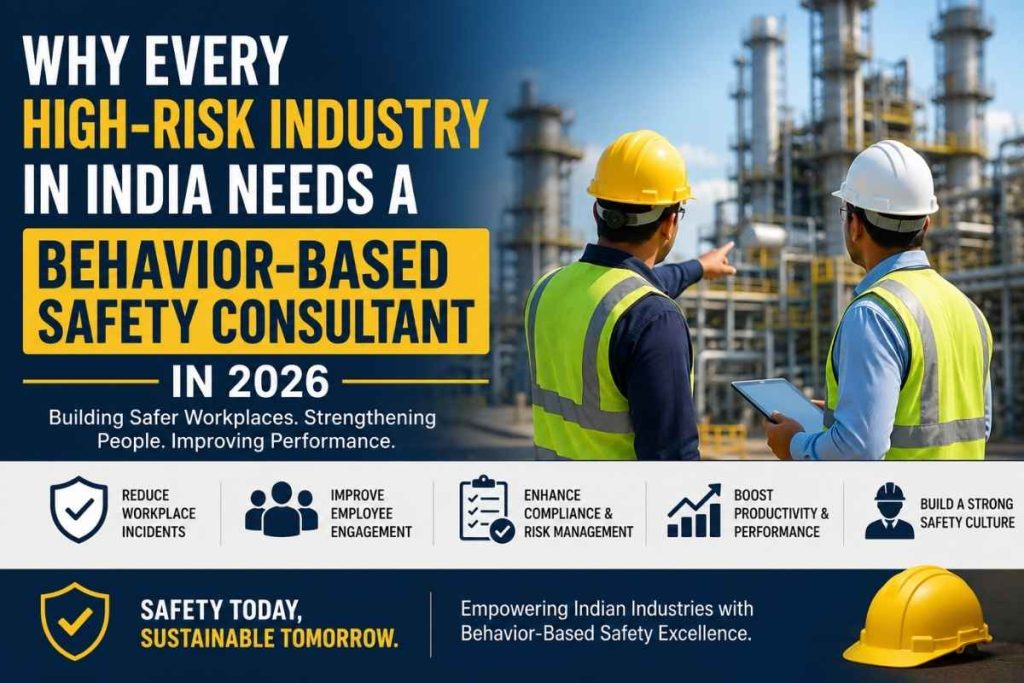
Workplace safety is no longer just about compliance, safety equipment, or written procedures. In 2026, organizations across India are realizing that human behavior plays a major role in workplace incidents. Even when companies have strong safety systems in place, unsafe actions, shortcuts, and lack of awareness can still lead to accidents.
This is why many high-risk industries are turning to a behavior-based safety consultant to strengthen their safety culture and reduce workplace risks. From manufacturing plants and construction sites to oil & gas facilities and chemical industries, organizations are focusing on behavior-based safety to create lasting improvements in workplace performance.
Understanding Behavior-Based Safety
Behavior-Based Safety (BBS) is a proactive approach that focuses on identifying and improving employee behaviors that can affect workplace safety. Instead of reacting after an incident occurs, BBS helps organizations understand why unsafe behaviors happen and how they can be prevented.
The goal is simple: encourage safe behaviors, reduce unsafe actions, and build a culture where safety becomes everyone’s responsibility.
A behavior-based safety consultant works closely with organizations to identify risk-prone behaviors, implement observation programs, provide coaching, and develop strategies that create positive behavioral change.
Why High-Risk Industries Need More Than Traditional Safety Programs
Many organizations invest heavily in safety procedures, equipment, and compliance programs. While these measures are essential, they often focus on systems rather than human behavior.
Research across industries consistently shows that a large percentage of workplace incidents involve human actions such as:
- Ignoring safety procedures
- Taking shortcuts to save time
- Improper use of PPE
- Lack of hazard awareness
- Poor communication among teams
- Failure to report unsafe conditions
Traditional safety programs may identify hazards, but they do not always address why employees engage in risky behaviors. This is where behavior-based safety consulting creates value.
By understanding behavioral patterns, organizations can address the root causes of unsafe actions before they result in injuries or operational disruptions.
The Growing Importance of Safety Culture in India
India’s industrial sector continues to grow rapidly. Manufacturing, infrastructure, logistics, pharmaceuticals, renewable energy, and construction industries are expanding at an unprecedented pace.
With this growth comes increased responsibility for protecting employees, contractors, assets, and business operations.
Organizations are now moving beyond compliance-focused safety programs and investing in stronger safety cultures. A positive safety culture ensures that employees actively participate in identifying risks, following procedures, and promoting safe work practices.
A behavior-based safety consultant helps organizations create this culture by making safety a daily habit rather than a regulatory requirement.
Key Benefits of Hiring a Behavior-Based Safety Consultant
1. Reduction in Workplace Incidents
One of the biggest advantages of behavior-based safety consulting is its ability to reduce workplace incidents. By identifying unsafe behaviors and addressing them through coaching and feedback, organizations can significantly lower accident rates.
When employees understand the impact of their actions, they are more likely to make safer decisions.
2. Improved Employee Engagement
Safety programs are most effective when employees actively participate. Behavior-based safety encourages workers to become involved in observations, discussions, and improvement initiatives.
This creates a sense of ownership and accountability throughout the organization.
3. Better Compliance and Risk Management
High-risk industries face strict regulatory requirements. A strong behavioral safety program supports compliance by ensuring employees consistently follow established procedures and safety standards.
Organizations can also strengthen their risk management efforts by combining BBS with tools such as audits and hazard assessments.
For example, conducting a Safety Audit Service can help identify operational gaps, while behavior-based safety addresses the human factors contributing to those risks.
4. Stronger Leadership Involvement
Safety culture starts at the top. Behavior-based safety consulting encourages leaders and supervisors to actively participate in safety initiatives.
When management demonstrates a visible commitment to safety, employees are more likely to follow safe work practices.
5. Enhanced Productivity
A safer workplace is often a more productive workplace. Reduced incidents mean less downtime, fewer disruptions, and improved operational efficiency.
Organizations that invest in safety culture often experience better employee morale and higher overall performance.
The Role of Training in Behavioral Safety
Training is a critical component of any successful BBS program. Employees need to understand not only what safe behaviors look like but also why they matter.
Effective Behavior-Based Safety Training helps employees recognize risks, improve decision-making, and develop safer work habits. It also provides supervisors with the skills needed to deliver constructive feedback and reinforce positive behaviors.
Training programs create awareness and help transform safety from a compliance activity into a shared organizational value.
Integrating Behavioral Safety with Other Safety Programs
Behavior-based safety should not operate in isolation. The most successful organizations integrate behavioral safety with their existing safety management systems.
This may include:
- Hazard identification programs
- Risk assessments
- Incident investigations
- Safety observations
- Emergency preparedness initiatives
- Compliance audits
For example, a Fire Safety Audit may identify deficiencies in fire protection systems or emergency preparedness. Behavior-based safety complements these findings by ensuring employees consistently follow fire prevention procedures and emergency response protocols.
Together, these approaches create a more comprehensive and effective safety management system.
Why 2026 Is the Right Time to Invest in Behavior-Based Safety
The workplace is evolving rapidly. New technologies, automation, changing workforce demographics, and increasing regulatory expectations are transforming how organizations manage safety.
At the same time, businesses face growing pressure to improve operational resilience, reduce incidents, and demonstrate a strong commitment to employee well-being.
Organizations that invest in behavior-based safety today will be better positioned to meet these challenges in the future.
By focusing on human behavior, companies can achieve sustainable improvements that go beyond compliance and create long-term business value.
Conclusion
High-risk industries cannot rely solely on procedures, equipment, and regulations to prevent workplace incidents. Human behavior remains one of the most significant factors influencing safety performance.
A behavior-based safety consultant helps organizations identify unsafe behaviors, improve employee engagement, strengthen safety culture, and reduce workplace risks. As Indian industries continue to grow in 2026, behavior-based safety will play an increasingly important role in protecting people, improving compliance, and driving operational excellence.
Organizations that prioritize behavioral safety today will build safer, stronger, and more resilient workplaces for the future.